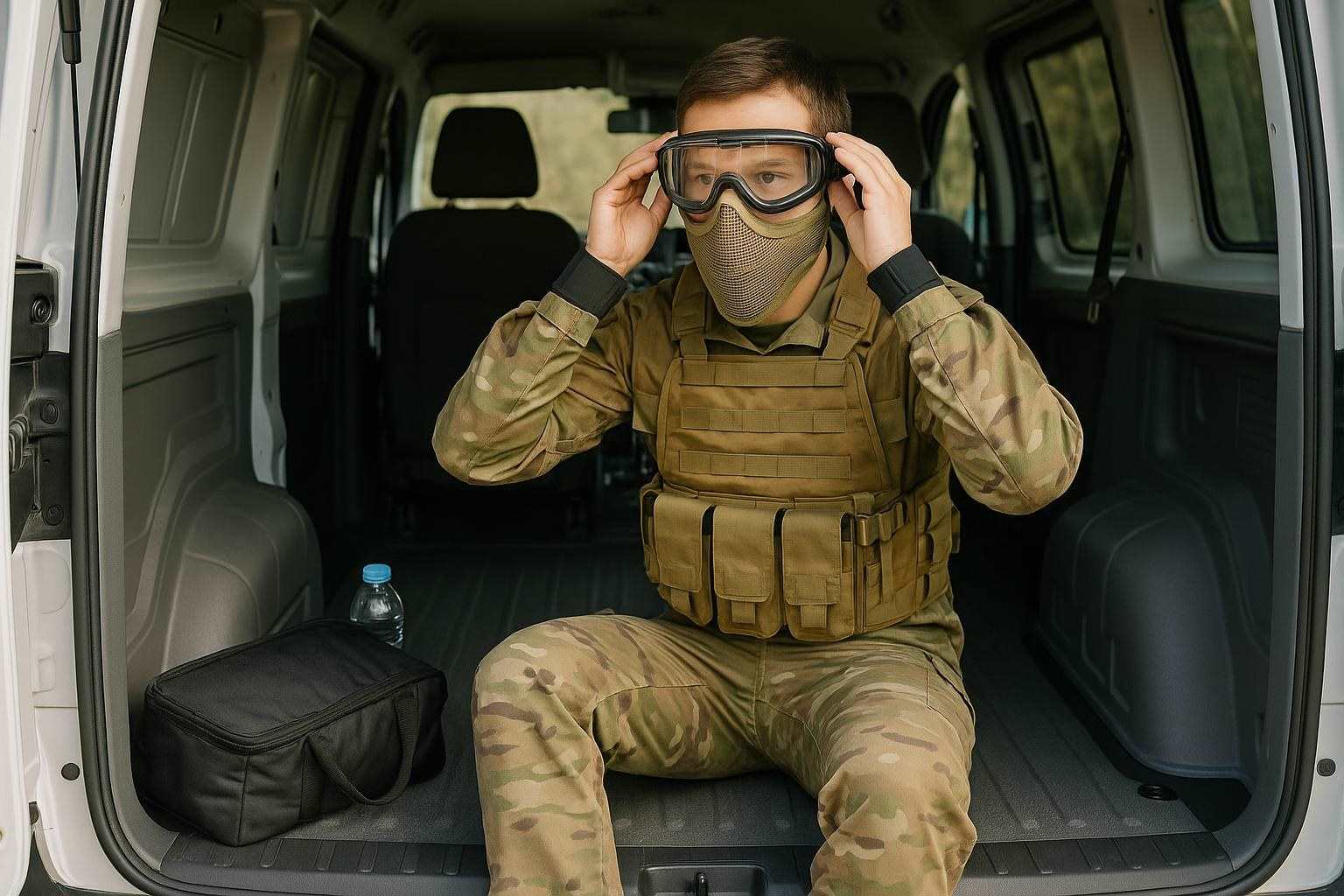

Before Saturday, decide whether you are bringing equipment you understand or borrowing or renting a setup at the venue. For a first full day, the simpler option is usually best: choose gear you can inspect, operate and pack without guesswork. Reliable eye protection, charged power sources and a clear understanding of the site's rules leave less time for preventable problems. Alex, preparing for a booked session with a rented replica and a small bag, provides a practical example.
Start with the venue's requirements, not the shopping list
Alex's first task is to read the field's player information and ask questions before leaving home. Rules differ, especially for eye and face protection, power limits, ammunition, pyrotechnics, clothing, footwear and replica transport. A rental package may include basic equipment but not water, gloves, spare clothing or lower-face protection.
Use the venue's current guidance rather than an old video or advice from someone who plays elsewhere. Requirements and local laws can change, so check official sources and the operator's latest instructions. When travelling, keep replicas unloaded, covered and handled discreetly, following applicable law and venue guidance.
If a rule is unclear, ask before the briefing. A short message can prevent an uncomfortable discussion at registration and reveal restrictions that affect what you pack.
Build protection around your eyes and face
Eye protection is the non-negotiable part of an airsoft protective gear setup. Choose equipment the venue accepts, with a secure fit and suitable impact protection. Ordinary sunglasses, workshop glasses or loose eyewear are not substitutes. A full seal helps prevent projectiles entering through gaps, while a retention strap reduces movement when running or bending.
Face protection also deserves attention. A lower-face guard can protect teeth and skin, and some fields require one for particular games or areas. If you wear prescription glasses, confirm that the goggles fit over them safely. Do not force a combination that presses the frames into your face or leaves the main lens unstable.
Alex should test the fit at home by looking up, turning his head and crouching. If the seal breaks, the strap slips or fogging starts almost immediately, solve the problem before game time. Bring a clean lens cloth and use only products approved for that lens material. Never lift eye protection inside an active area, even briefly.
Pack for a long day, not just the first game
A useful airsoft field checklist covers predictable interruptions without filling the bag with unnecessary accessories. Alex's compact bag can include:
– Field-approved eye and face protection, plus a clean lens cloth
– The required replica, magazines and ammunition, if not renting them
– Fully charged batteries or suitable gas, packed and handled as directed by the venue
– Water, food and any personal medication needed during the day
– Sturdy closed footwear, weather-appropriate layers and spare socks
– Gloves, basic tools for ordinary adjustments and a small rubbish bag
– Identification, booking details and a way to record emergency contact information
Do not pack a tool simply because it came with a replica. If you do not know what an adjustment does, leave it alone and ask a marshal or technician. Avoid unapproved modifications, particularly changes that could affect safe operation or breach site limits.
On arrival, keep rental equipment together until staff explain its controls. Ask how to engage the safety, where magazines may be inserted, when the replica must be unloaded and where test firing is allowed. Asking is quicker than guessing.
Use a short maintenance check between games
Good airsoft equipment maintenance begins with inspection, not disassembly. Before the first game, Alex can check that eye protection is clean and undamaged, magazines feed correctly, controls move as expected and the power source is secure. Any crack, loose part, unusual sound or failed feed should go to venue staff rather than a hurried repair beside the staging area.
Keep dirt, water and loose ammunition away from open mechanisms. Wipe external equipment with an appropriate dry or lightly damp cloth, then store it safely when not in use. Handle and store batteries, gas containers and other consumables according to their instructions and the field's policy. Do not leave equipment in direct heat or charge a battery with an incompatible charger.
After the session, unload and make the replica safe as directed, remove the power source when appropriate and inspect it for damage. Clean only parts your manual or venue staff identify as user-serviceable. Routine care is valuable; improvised upgrades are not a substitute for qualified repair.
Treat the briefing as part of the game
Field rules are not background paperwork. The safety briefing explains boundaries, surrender or engagement expectations, dead-player procedures, safe zones, blind spots, minimum distances where applicable and what to do when a marshal stops play. Listen even if a friend says the site resembles another venue; small differences can affect every game.
Sportsmanship starts with honest hit-calling. If you feel a clear hit, acknowledge it and leave the active area. If a hit is disputed, avoid arguing in the moment and report the concern to a marshal after the action. Do not blind-fire, shoot through unsafe gaps or continue firing at someone who is clearly out. Follow the venue's instructions on surrender calls and close engagements rather than inventing your own standard.
Alex's day is more likely to go well if the goal is reliable participation, not proving toughness. Help new players understand safe procedures, return borrowed equipment as instructed and leave the staging area cleaner than you found it. If weather, fatigue or a damaged mask makes continued play unsafe, sit out and tell staff.
Rules and legal requirements can change, so verify current local guidance before each new venue or travel plan. Preparation cannot remove every surprise, but it can simplify the important decisions: protect your eyes, follow the site, maintain equipment conservatively and give other players the fair, safe game you expect from them.